

Family types explored
- Families experiencing parental separation or divorce
- Families experiencing social or geographical isolation
2.1 Understanding the Context
The social context shapes children’s relationships, feelings of attachment, community involvement, and access to support services. The current context focuses on the social or geographic isolation of families and the effects of parental separation and divorce on children.
Parental separation could affect the living environment, routine, education, and parent-child relationship of the child. Approximately 50,000 Australian children are affected by parental divorce yearly; however, there are more children who are affected by parental separation (AIFS, 2026). The 2021 Census also noted that there were over one million single-parent families in Australia, accounting for 15.9% of Australian families (ABS, 2022).
Ecological systems theory by Bronfenbrenner shows how the development of children is shaped by the interaction of the family, early childhood services, community, and broader society (Bronfenbrenner, 1979).
Key Statistic

2.2 Impact on Children and Families
Children's separation from their parents, and social/geographical isolation have impacts on children's development, learning, well-being and participation, but children's reactions are different. Separation involves changes in living situations, relationships with parents and siblings, routines and interactions with peers. Some children may feel lonely, emotionally distressed, struggle with concentration, or disengagement in learning (AIFS, 2026).
The establishment of predictable routines, supportive relationships and age-appropriate explanations can assist children in feeling secure during family transitions. However, separation does not necessarily have negative consequences, and many children manage to cope well with changing family circumstances (AIFS, 2020, 2026). Social or geographical isolation can restrict children's relationships, community involvement and access to resources especially if there are few services locally.
Educators' response strategies include offering consistent routines, listening to children's worries, building respectful relationships with families and providing opportunities for social interaction.
2.3 Social Policy and Australian Responses
Australia's responses to parental separation seeks to ensure that the well-being of the children is taken care of during the process of change. The Family Law Act 1975 (Cth) lays down the guidelines for parenting after separation, where the best interests of the child are considered first (Family Law Act 1975 [Cth], ss. 60CA–60CC).
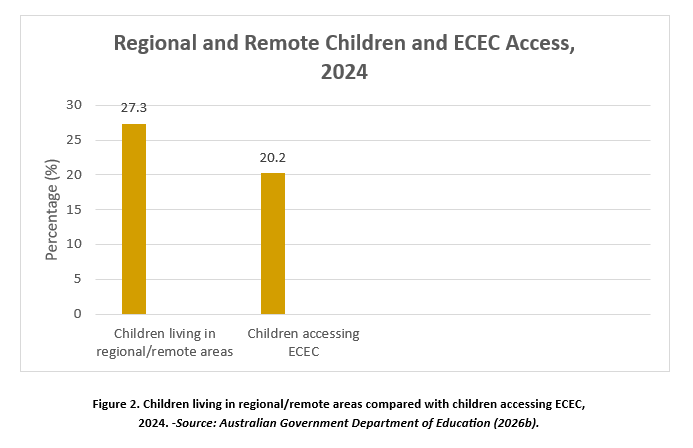
In relation to children of geographically isolated families, In Home Care (IHC) is offered as an alternative ECEC for the eligible families who find it difficult to access other forms of approved ECEC owing to their geographical isolation (Australian Government Department of Education, 2026a). In 2024, 27.3% of Australia's children belonged to the regions of remote areas, whereas 20.2% of those attending ECEC belonged to such regions (Australian Government Department of Education, 2026b).
🔎 Learn More
In Home Care – Australian Government
2.4 Strategies for Practice
- Provide predictable routines and emotional security
Educators could create consistent routines and safe environment to ensure children feel secure during family transformations (Australian Institute of Family Studies [AIFS], 2026).
- Use age-appropriate communication.
Educators could listen to the concerns of children, give developmentally appropriate answers and allow children to express their feelings using talk and play (AIFS, 2026).
- Strengthen child-centred and family partnerships.
Educators could make decisions together with children on their development issues and maintain respectful communication with separated parents (AIFS, 2026).
- Create opportunities for social connection.
Educators could help socially isolated families to participate in various playgroup events and ensure children have a chance to engage in play and social interaction (AIFS, 2025).
- Connect families with appropriate support services.
educators could inform families about the community and professional services available with their permission (AIFS, 2026).
2.5 Community and Professional Partnerships
- Family Relationship Centres: Provide information, dispute resolution, and parenting advice to separating families. Teachers can offer information and referral services with the parents' permission (Family Relationships Online, 2024).
- Family Relationship Advice Line: Provides information, advice and referrals for families experiencing separation. Educators can use the service to identify appropriate support for families (Family Relationships Online, 2024).
- Supporting Children after Separation Program: Provide appropriate help to children whose parents are separating. Teachers may refer families to the program if further help is required (Family Relationships Online, 2024).
- Playgroups and Playgroup Australia: Provide opportunities for children aged 0–5 to play and interact while helping parents build social connections. Educators can connect isolated families with local playgroups (AIFS, 2025).
- Family and Relationship Services: Provide early intervention, counseling, referrals, and education to families who are separated or vulnerable. Educators can develop referrals in collaboration with the families’ permission (Department of Social Services, 2026).
2.6 Resources for Educators and Children
Projects, Programs and Websites
Provides details on services such as Supporting Children After Separation and assists educators in identifying services appropriate for children (Family Relationships Online, 2024).
Provides advice on how to support children during separation by maintaining routines and support systems (Raising Children Network, 2026).
Provides a summary of literature on children’s psychological and relational needs after parental separation (AIFS, 2026).
Offers opportunities for children and carers to play and interact. Educators can refer isolated families to their nearest playgroup (AIFS, 2025).
Children’s Storybooks
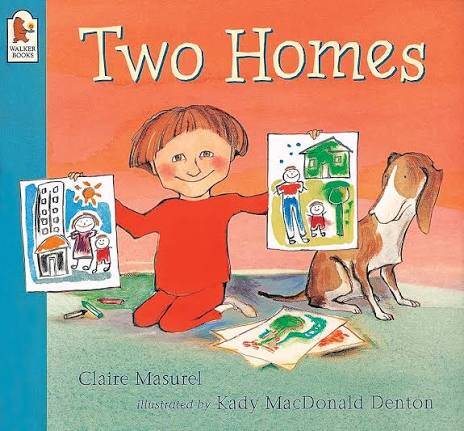
- Two Homes – Claire Masurel: Explores a child's experience of living in two homes after parental separation and supports understanding of family change, security and belonging (Masurel, 2001).
- Mum and Dad Glue – Kes Gray and Lee Wildish: Explores a child's feelings about parental separation and can encourage emotional expression and reassurance (Gray & Wildish, 2000).
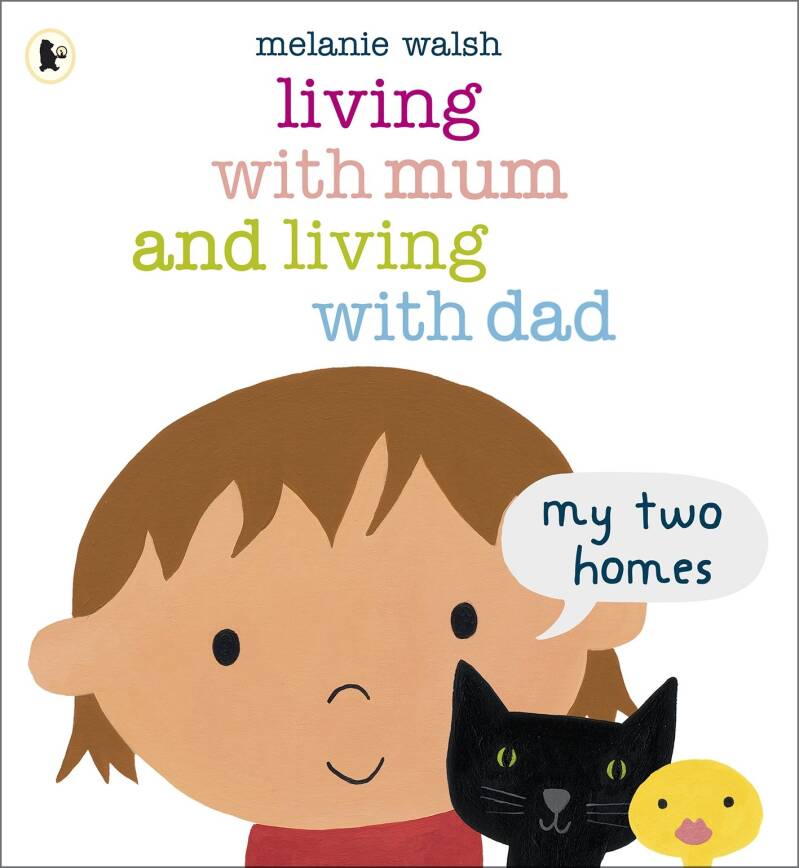
- Living with Mum and Living with Dad: My Two Homes – Melanie Walsh: Explores a young child's experience of living between two homes after parental separation and provides reassurance about love, family relationships and changing routines (Walsh, 2013).
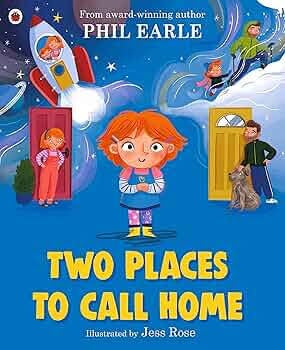
- Two Places to Call Home – Phil Earle: Explores a child's experience of living in two homes and supports discussion about feelings, family change and adapting to new circumstances (Earle, 2022).
Children's Videos, Educational Programs and Shows
-
Focuses on exploring various living situations and helps children understand different types of homes and belonging (ABC Kids, n.d.).
Focuses on exploring relationships in family, friendships, and community, and helps children understand their relationships and belonging (ABC Kids, n.d.).
Helps children understand different family structures (ABC Kids, n.d.).
Helps in showing the cooperation between families and friends (ABC Kids, n.d.).
Using the Resources to Build Understanding, Empathy and Resilience
The above-mentioned resources assist children in investigating aspects related to family changes, belonging and connections. Questions can be used by educators to help children express their emotions, show empathy and build resilience (Family Relationships Online, 2024).
Refrences
ABC Kids. (n.d.). Play School: Family, community and culture. ABC.
Australian Bureau of Statistics. (2022). Household and families: Census, 2021. Australian Government.
ABS – Household and families: Census 2021
Australian Government Department of Education. (2026). In Home Care. Australian Government.
Australian Government – In Home Care
Australian Government Department of Education. (2026). In Home Care National Guidelines. Australian Government.
In Home Care National Guidelines
Australian Government Department of Social Services. (2026). Children and Family Support Program. Australian Government.
Children and Family Support Program
Australian Government Department of Social Services. (2026). New Children and Family Support (CaFS) Program. Australian Government.
New Children and Family Support (CaFS) Program
Australian Institute of Family Studies. (2020). Child wellbeing after parental separation. Australian Government.
AIFS – Child wellbeing after parental separation
Australian Institute of Family Studies. (2026). Children’s support needs following parental separation. Australian Government.
AIFS – Children’s support needs following parental separation
BC Kids. (n.d.). Play School. ABC.
Bronfenbrenner, U. (1979). The ecology of human development: Experiments by nature and design. Harvard University Press.
Earle, P. (2022). Two places to call home. [Use the publisher details from your edition.]
Family Law Act 1975 (Cth).
Federal Register of Legislation – Family Law Act 1975
Family Relationships Online. (2024). Children and parenting after separation. Australian Government.
Family Relationships Online – Children and parenting after separation
Family Relationships Online. (2024). Services for children. Australian Government.
Family Relationships Online – Services for children
Family Relationships Online. (2024). Talking to children about separation. Australian Government.
Family Relationships Online – Talking to children about separation
Gray, K., & Wildish, L. (2000). Mum and Dad glue. [Use the publisher details from your edition.]
Masurel, C. (2001). Two homes. Candlewick Press.
Raising Children Network. (2024). Separation & divorce: Helping children adjust.
Raising Children Network – Helping children adjust after separation
Raising Children Network. (2024). Separation, divorce, children in two homes.
Raising Children Network – Children in two homes
Walsh, M. (2013). Living with Mum and living with Dad: My two homes. [Use the publisher details from your edition.]
Create Your Own Website With Webador