

Family/community contexts explored:
- Families experiencing parental mental health challenges
- Families with children experiencing disability or long-term health needs
4.1 Understanding the Context
Health and wellbeing are key contexts for early childhood as children's development is affected by their wellbeing. In cases where children live with parents suffering from issues relating to mental health, they experience disruptions in their routine, relationships and family dynamics, even though the consequences differ from child to child (AIHW, 2022; AIFS, 2026).
Children with disabilities or chronic conditions may need more help in areas such as communication, learning, mobility, and inclusion. According to the ABS, there were 11.0% of children in Australia aged 0-14 with disability in 2022 (ABS, 2025).
Ecological systems theory as proposed by Bronfenbrenner describes how the children's development is impacted by the interaction between the family, ECEC centers, community, and the larger society (Bronfenbrenner, 1979).
Key Statistic Card

4.2 Impact on Children and Families
Health and wellbeing conditions can affect children's development, learning, social interactions, and involvement in early childhood education. In cases where one parent suffers from mental health issues, children can experience disruptions in the regularity of family routines, emotional presence, and communication within the family. However, these effects do not have to happen, and strong relationships, routine and access to adequate service provision can help improve children's well-being (AIHW, 2022).
In cases where children suffer from disabilities or any other medical condition that requires attention, there can be restrictions that prevent their full participation in daily activities. Such barriers can include inappropriate environment, communication approaches, and learning conditions. Therefore, inclusive early childhood practice should concentrate on children's skills and abilities and provide reasonable adjustments (ACECQA, 2024).
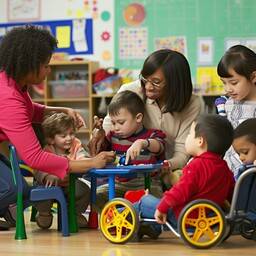
In the context of early childhood education and care, such situations demonstrate that consistency of routines, inclusion, respectful communication, and collaboration with families and other professionals are critical. Early childhood educators should not make any assumptions regarding families but should collaborate with parents and caregivers to identify unique needs and strengths of each child, including their cultural backgrounds.
4.3 Social Policy and Australian Responses
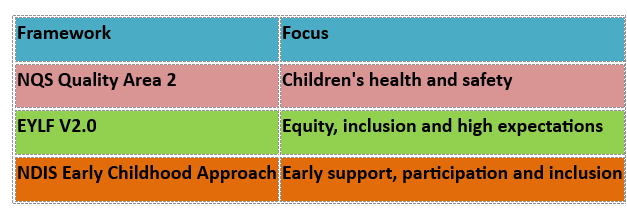
There are many policies and frameworks in Australia that aid children's health, wellbeing, and inclusion. The NQS Quality Area 2 – Children's Health and Safety requires early childhood services to protect and promote children's health, safety and wellbeing. This involves children's physical and psychological wellbeing, health processes, illness and injury prevention and management and provision for rest and relaxation (Australian Children's Education and Care Quality Authority [ACECQA], 2026).
Similarly, under EYLF V2.0, educators need to take into account each child's individuality, development, interests, and experiences while making plans for education. There are many principles of equity, inclusion, and high expectations in order to ensure that children, particularly children with disability or any health concerns, can effectively engage in learning experiences (ACECQA, 2026).
The National Disability Insurance Scheme (NDIS) early childhood program offers yet another solution for young children who suffer from developmental delay and disabilities. This approach assists children aged less than nine and helps them develop their abilities, participate in various activities, and be included into the community. The partnerships in early childhood can assist parents and families in connecting with mainstream and community organizations and give families access to additional information and assistance (NDIA, 2026).
These policies affect early childhood practice as they encourage teachers to create safe, inclusive, and responsive environment and collaborate with families and other professionals as well as make appropriate adjustments for each child to participate and be healthy.
Australian Health & Wellbeing Frameworks
4.4 Strategies for Practice
- 🤝 Build respectful, strengths-based relationships: It is imperative that educators talk respectfully with parents and carers and acknowledge the strengths of families rather than making assumptions regarding mental health, disability, or family situations (Australian Government Department of Education, 2022).
- 🏠 Create predictable and emotionally safe environments: Consistent routines, positive relationships, and effective communication will help to provide a secure atmosphere for children, especially in case of complicated family situations (AIHW, 2022).
- ♿ Use inclusive and accessible practices: Educators should modify the classroom environment, modes of communication, activities, and processes to help children with disabilities and/or special health care needs engage in everyday experiences (ACECQA, 2024).
- 👨👩👧 Work collaboratively with families and professionals: Educators may collaborate with parents, health-care professionals and inclusion professionals to identify individual children’s strengths, needs and preferences for participation. Information must be shared with respect for individual privacy and appropriate consent (ACECQA, 2024).
- 🗣️ Promote children's agency and participation: Children need to be encouraged to make decisions, express themselves and engage in learning processes in ways that suit their capabilities and communication style (Australian Government Department of Education, 2022).
4.5 Community and Professional Partnerships
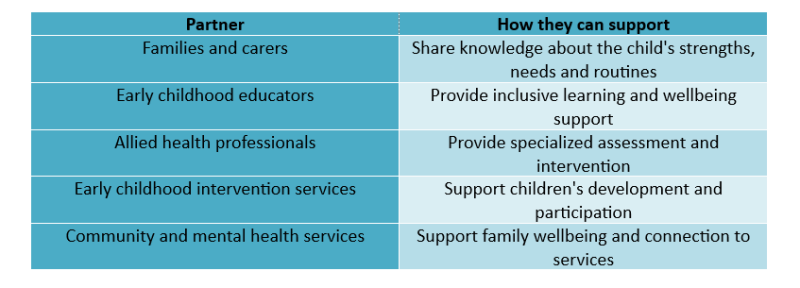
Working in collaboration with families, ECEC, health professionals, and community agencies will improve children's well-being and health. The educator can collaborate with families to identify the strength and health needs of children. When needed, educators can refer families to various mental health services, early intervention, and allied health services (Australian Government Department of Education, 2022; ACECQA, 2024).
4.6 Resources for Educators and Children
Projects, Programs and Websites
- Beyond Blue – Parenting and Mental Health: Provides resources to support children's and families' mental health and wellbeing (Beyond Blue, n.d.).
- AllPlay Learn – Inclusive Early Childhood Resources: provides practical strategies for including children with disability and developmental differences (AllPlay Learn, n.d.).
- Raising Children Network – Children with Disability: Provides information about children's development, disability, inclusion and wellbeing (Raising Children Network, n.d.).
- NDIS – Guide to the Early Childhood Approach: Provides information about early support, inclusion and participation for children with developmental delay or disability (NDIS, 2026).
Children's Storybooks
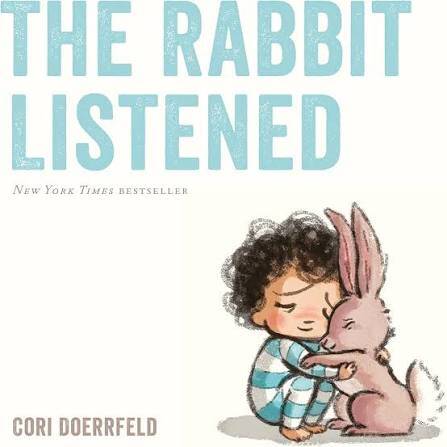
- The Rabbit Listened – Cori Doerrfeld: Explores emotional support, empathy and responding to difficult experiences (Doerrfeld, 2018).
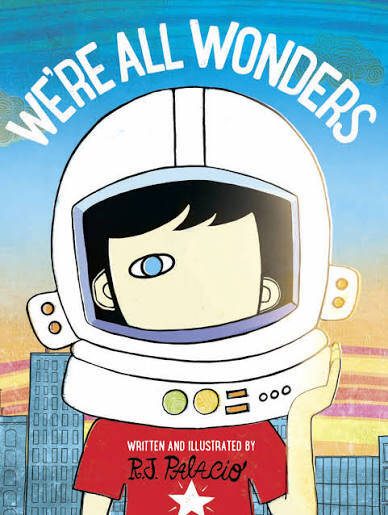
- We're All Wonders – R. J. Palacio: Explores kindness, empathy, acceptance and understanding differences (Palacio, 2017).
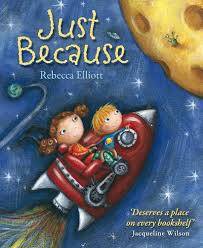
- Just Because – Rebecca Elliott: Explores sibling relationships, disability, independence and family support (Elliott, 2010).
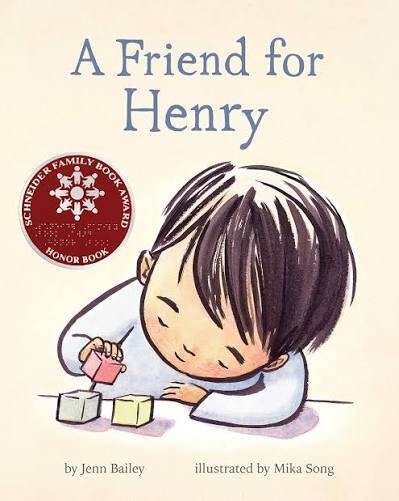
- A Friend for Henry – Jenn Bailey: Explores friendship, communication, inclusion and understanding individual differences (Bailey & Song, 2019).
Children's Videos, Educational Programs and Shows
- Play School – How Do You Feel Today?: Helps children recognize and talk about feelings and emotions (ABC Kids, n.d.).
- Play School – Move Your Body: Encourages physical activity, movement and healthy wellbeing (ABC Kids, n.d.).
- Play School – Get Ready for Bed: Supports children's understanding of positive bedtime and sleep routines (ABC Kids, n.d.).
- ABC Kids – Health and Wellbeing: Provides age-appropriate videos and resources that support children's physical and emotional wellbeing (ABC Kids, n.d.).
Using the Resources to Build Understanding, Empathy and Resilience
These resources help children recognize emotions, understand individual differences and develop empathy. Educators can use stories, videos, play and open-ended discussion to encourage children to express feelings, respect others and build resilience.
References
ABC Kids. (n.d.). ABC Kids – Health and wellbeing. ABC.
ABC Kids – Health and Wellbeing
ABC Kids. (n.d.). Play School – Get ready for bed. ABC.
Play School – Get Ready for Bed
ABC Kids. (n.d.). Play School – How do you feel today?. ABC.
Play School – How Do You Feel Today?
ABC Kids. (n.d.). Play School – Move your body. ABC.
Play School – Move Your Body
AllPlay Learn. (n.d.). Early childhood.
AllPlay Learn – Early childhood resources
Australian Bureau of Statistics. (2025). Children and young people with disability, 2022. Australian Government.
ABS – Children and young people with disability 2022
Australian Children's Education and Care Quality Authority. (2024). Information sheet: EYLF practices – Cultural responsiveness.
ACECQA – Cultural responsiveness
Australian Children's Education and Care Quality Authority. (2026). Quality Area 2 – Children's health and safety.
ACECQA – Quality Area 2
Australian Government Department of Education. (2022). Belonging, being and becoming: The Early Years Learning Framework for Australia (V2.0). Australian Government Department of Education.
Australian Government – EYLF V2.0
Australian Government Department of Education. (2026). Child Care Subsidy. Australian Government.
Australian Government – Child Care Subsidy
Australian Institute of Health and Welfare. (2022). Australia's children: Children with mental illness. Australian Government.
AIHW – Australia's children: Children with mental illness
Bailey, J., & Song, M. (2019). A friend for Henry. Chronicle Books.
Jenn Bailey – A Friend for Henry
Beyond Blue. (n.d.). Parenting and mental health.
Beyond Blue – Parenting and mental health
Bronfenbrenner, U. (1979). The ecology of human development: Experiments by nature and design. Harvard University Press.
Doerrfeld, C. (2018). The rabbit listened. Dial Books for Young Readers.
Elliott, R. (2010). Just because. [Use the publisher details from the edition you used.]
National Disability Insurance Agency. (2026). Guide to the early childhood approach. Australian Government.
NDIS – Guide to the early childhood approach
Raising Children Network. (n.d.). Children with disability.
Raising Children Network – Children with disability
Create Your Own Website With Webador