

Family types explored:
- Single-parent families experiencing financial hardship
- Families experiencing housing stress or homelessness
1.1 Understanding the Context
Economic disadvantage is one of the key contexts in early childhood education since a child is affected by the social and economic environment in which he or she lives. Economic disadvantage can include poverty, low-income, unemployment, material deprivation and difficulty accessing housing, food, health, and transport. The context involves single-parent households experiencing economic stress and housing stress or homelessness.
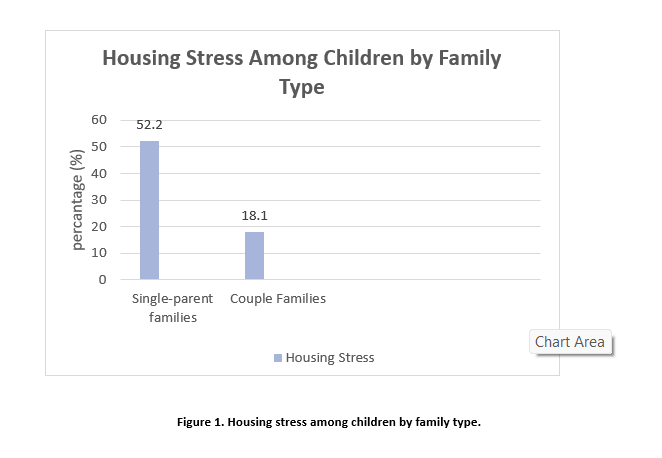
Single-parent households may find it especially hard due to the fact that one parent has to balance working and caregiving. 29% of single parents with dependents experienced financial stress in 2023, while among couples with dependents it was 26% (AIHW, 2025). Housing stress is described as spending more than 30% of gross household income on housing expenses (AIHW, 2018). 52.2% of children in single-parent households experienced housing stress, while for children from couple families it was 18.1% (AIHW, 2018).
Bronfenbrenner's ecological system theory helps us understand how family environment, housing, work, services and policy impact a child's development.
Key Statistics

1.2 Impact on Children and Families
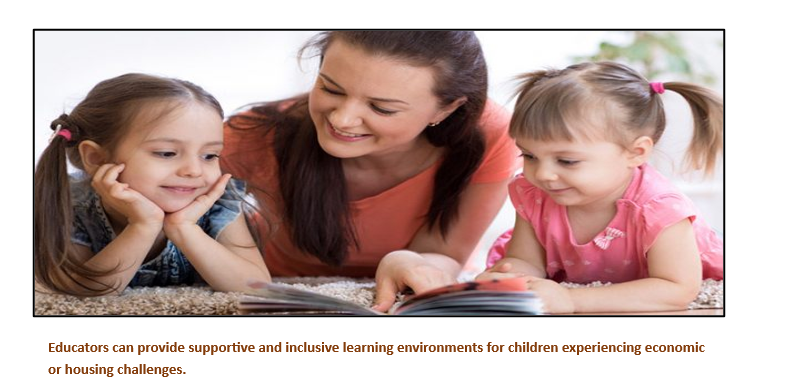
Housing and economic issues have the potential to influence children’s development, learning, wellbeing and engagement in early childhood education settings. Economic issues may lead to difficulties in covering costs of food, health care, transport, and schooling while issues around housing may impact children’s regularity in routine activities, sleep, family life, and participation in early education (AIHW, 2022).
Changing houses regularly may influence children’s ability to develop meaningful relations with educators and other children. Parents’ stress levels will also increase due to housing and economic issues that may impact family relations negatively (AIHW, 2025). Educators should refrain from judging irregular attendance and tiredness of children and parents as a result of lack of family interest.
1.3 Social Policy and Australian Responses
Australian policy actions in relation to economic disadvantage involve financial subsidies and those that facilitate increased access to affordable ECEC. The CCS makes the cost of ECEC services cheaper for eligible families, while ACCS helps to make ECEC accessible to those who are facing temporary economic difficulties. In Victoria, Free Kinder is a funding scheme for eligible children for a kindergarten program (Australian Government Department of Education, 2026a, 2026b; Victorian Government, 2026).

🔎 Learn More
Child Care Subsidy – Australian Government ← https://www.education.gov.au/early-childhood/providers/child-care-subsidy
1.4 Strategies for Practice
- Build strengths-based relationships: Develop respectful relationships without making assumptions about families' financial circumstances (Australian Government Department of Education, 2026a).
- Reduce financial barriers: Provide affordable or free opportunities so children can participate equally (Australian Government Department of Education, 2026b).
- Provide predictable routines: Consistent routines and supportive relationships can provide security during family instability (AIHW, 2022).
- Connect families with services: With family permission, provide information about financial, housing and community support services (Australian Government Department of Education, 2026a).
- Promote inclusive participation: Work with families and professionals to identify and address barriers to children's participation (Australian Government Department of Education, 2026b).
1.5 Community and Professional Partnerships
- Services Australia: provides financial assistance and manages the Child Care Subsidy; educators can provide information and referrals (Services Australia, 2026).
- Financial counsellors: Support families experiencing financial difficulty with financial information and options.
- Housing and Homelessness Services: Assist families experiencing housing insecurity and can be accessed with family consent (Victorian Government, 2026).
- Family support workers/social workers: Support families experiencing complex financial or social circumstances while maintaining confidentiality.
- Community organizations: Connect families with local services and support networks.
1.6 Resources for Educators and Children
Projects, Programs and Websites
- Australian Institute of Family Studies (AIFS) – Supporting Families to Navigate Tough Times: Provides resources about financial and housing insecurity and strengths-based family support (AIFS, 2024).
- Australian Institute of Health and Welfare (AIHW) – Housing Stress: Provides Australian information and data about housing stress and children's wellbeing (AIHW, 2022).
- Raising Children Network – Money Management for Children: Provides age-appropriate information about money, needs, wants, saving and spending (Raising Children Network, 2026).
- Australian Government – Additional Child Care Subsidy: Provides information about additional financial assistance for eligible families (Australian Government Department of Education, 2026).
Children's Storybooks
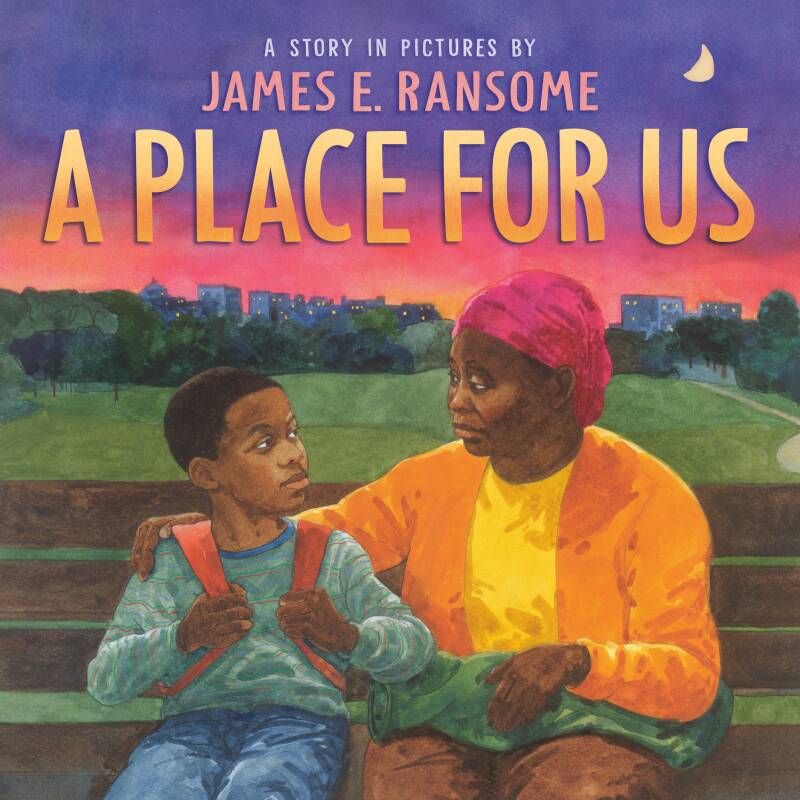
- A Place for Us – James Ransome: Explores homelessness, family relationships and empathy (Ransome, 2025).
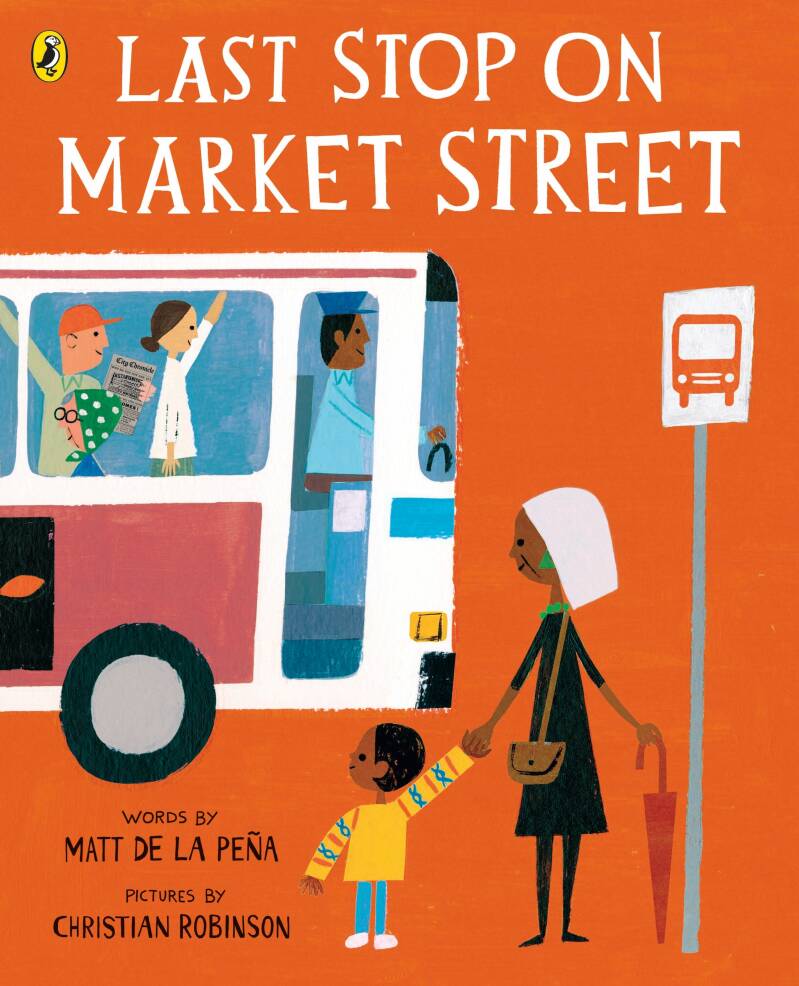
- Last Stop on Market Street – Matt de la Peña and Christian Robinson: Explores community, kindness and appreciation (de la Peña & Robinson, 2015).
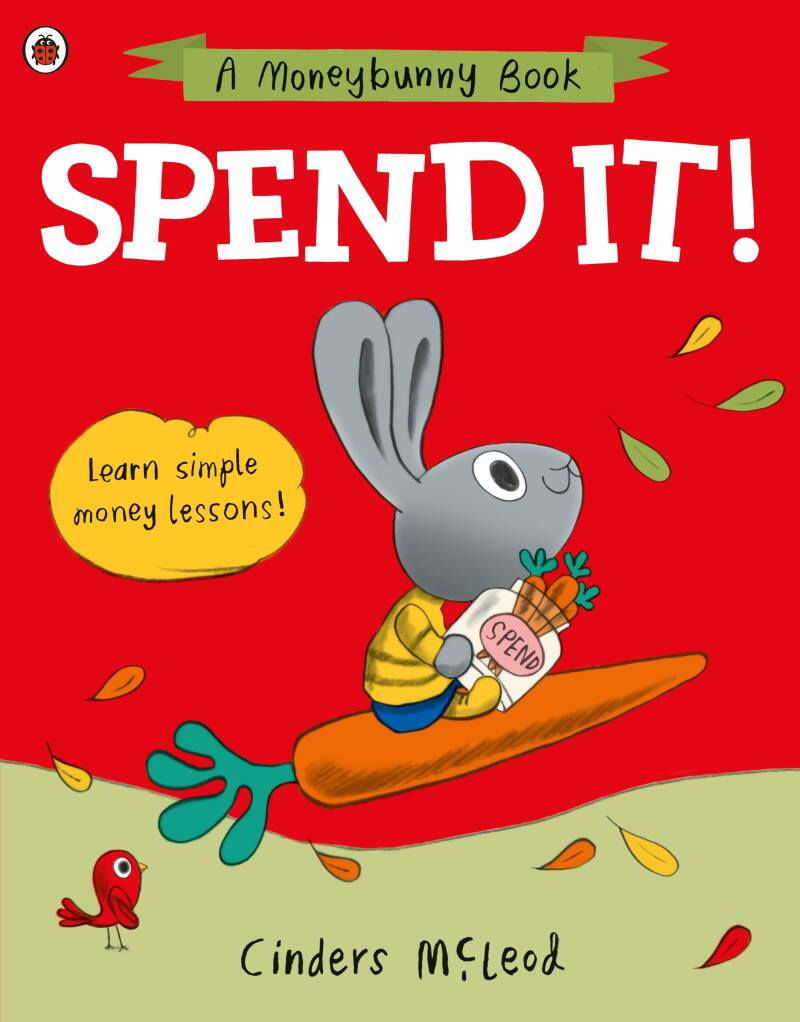
- Spend It! A Moneybunny Book – Cinders McLeod: Introduces spending, saving, needs and wants (McLeod, 2022).
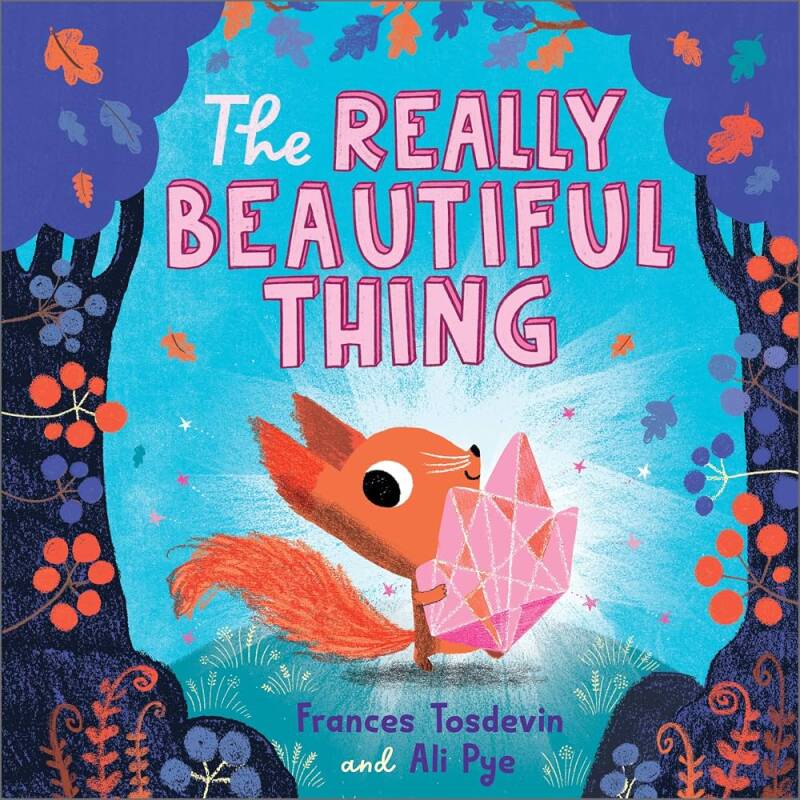
- The Really Beautiful Thing – Frances Tosdevin and Ali Pye: Explores money, friendship, poverty and homelessness (Tosdevin & Pye, 2025).
Children's Videos, Educational Programs and Podcasts
- Play School – Helping Hands: Explores helping, cooperation and seeking support (ABC Kids, n.d.).
- Play School – Me & My Place: Explores different homes and living environments (ABC Kids, n.d.).
- The New Home – Play School: Explores adapting to a new environment with support from others (ABC Kids, n.d.).
- How to Teach Your Children about Money – ABC Melbourne: Provides ideas for teaching children about money, needs and wants (ABC Melbourne, 2021).
Using the resources to build understanding, empathy and resilience
Children can learn about various family situations via storytelling, play and media, without being stigmatized by these activities. Using open questions like "How do you feel as a character?" or "Who was there to assist?" may foster empathy, comprehension and resilience (AIFS, 2024; AIHW, 2022).
ABC Kids. (n.d.). Play School: Family, community and culture. ABC.
https://www.abc.net.au/abckids/programs/play-school/family-community-and-culture/12576192
ABC Kids. (n.d.). Play School's Helping Hands. ABC.
https://www.abc.net.au/abckids/programs/play-school/extension-ideas/helping-hands/11618032
ABC Kids. (n.d.). The New Home – Story. ABC.
https://www.abc.net.au/abckids/early-education/family-community-and-culture/play-school-the-new-home-story/13238374
ABC Melbourne. (2021, April 8). Teaching children about money. ABC.
https://www.abc.net.au/melbourne/teaching-children-about-money/13293416
Australian Bureau of Statistics. (2022). Household and families: Census, 2021. Australian Government.
https://www.abs.gov.au/statistics/people/people-and-communities/household-and-families-census/latest-release
Australian Government Department of Education. (2026a). Additional Child Care Subsidy. Australian Government.
https://www.education.gov.au/early-childhood/providers/additional-child-care-subsidy
Australian Government Department of Education. (2026b). Child Care Subsidy. Australian Government.
https://www.education.gov.au/early-childhood/providers/child-care-subsidy
Australian Institute of Family Studies. (2024). Supporting families to navigate tough times: The impact of financial and housing insecurity, isolation and discrimination. Australian Government.
https://aifs.gov.au/resources/webinars/supporting-families-navigate-tough-times-impact-financial-and-housing-insecurity
Australian Institute of Health and Welfare. (2018). Children's headline indicators: Housing stress. Australian Government.
https://www.aihw.gov.au/reports/children-youth/childrens-headline-indicators/contents/19-shelter/indicator-19-housing-stress
Australian Institute of Health and Welfare. (2022). Australia's children: Housing stress. Australian Government.
https://www.aihw.gov.au/reports/children-youth/australias-children/contents/housing/housing-stress
Australian Institute of Health and Welfare. (2025). Financial stress and mental health. Australian Government.
https://www.aihw.gov.au/mental-health/topic-areas/other-mental-health-reports/financial-stress
Bronfenbrenner, U. (1979). The ecology of human development: Experiments by nature and design. Harvard University Press.
de la Peña, M., & Robinson, C. (2015). Last stop on Market Street. G. P. Putnam's Sons.
McLeod, C. (2022). Spend it!. Ladybird.
https://www.penguin.com.au/books/spend-it-9780241527528
Raising Children Network. (2026). Money management for children.
https://raisingchildren.net.au/school-age/family-life/pocket-money/money-management-for-children
Ransome, J. (2025). A place for us. Nancy Paulsen Books.
https://www.penguin.com.au/books/a-place-for-us-9780593324882
Services Australia. (2026). Child Care Subsidy. Australian Government.
https://www.servicesaustralia.gov.au/child-care-subsidy
Tosdevin, F., & Pye, A. (2025). The really beautiful thing. Andersen Press.
https://www.walkerbooks.com.au/book/9781839134609/
Victorian Government. (2026). Free Kinder.
https://www.vic.gov.au/kindergarten-sector-guide/free-kinder
Create Your Own Website With Webador