

Family/community contexts explored
- Aboriginal and Torres Strait Islander families and communities
- Culturally and linguistically diverse (CALD) families
3.1 Understanding the Context
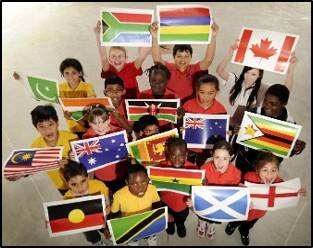
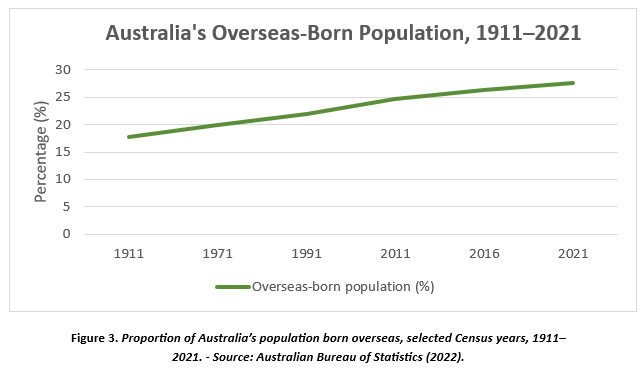
Australia is made up of culturally and linguistically diverse families who bring with them various languages, cultures, traditions and ways of being into the early years of children. According to the 2021 Census data, 27.6% of Australians were born in another country, and Mandarin, Arabic, Vietnamese, Cantonese and Punjabi were some of the common languages spoken other than English (ABS, 2022).
Diversity is an extremely important factor in early years education since culture, language, family and community play an important role in children's identity and participation. The EYLF V2.0 highlights the need for diversity and cultural responsiveness as key factors in high-quality practice. Educators are required to acknowledge the cultural understandings of children and families and to provide an environment which respects multiple understandings of knowledge, being, and doing (ACECQA, 2025).
Ecological systems theory of Bronfenbrenner serves well as a sociological framework because the development of the children is determined by the interaction of their families, early childhood services, community, and broader society (Bronfenbrenner, 1979). The recent studies also show that multiculturalism, interculturalism, and intersectionality serve as vital elements in understanding diversity and promoting inclusiveness in place of cultural tokenism.
The cultures of the Aboriginal and Torres Strait Islanders are an integral element of the cultural diversity in Australia. EYLF V2.0 insists on embedding the perspectives of the Aboriginal and Torres Strait Islanders throughout early childhood education and collaborating in respectful manner with the local community. ACECQA also emphasizes that there is no single approach because Aboriginal and Torres Strait Islander cultures are diverse.
Key Statistic

3.2 Impact on Children and Families
Diversity in culture and language might impact identity formation, language acquisition, children's wellbeing, social relationships, and participation in early years' environments. The identification and respect for the child's home languages and cultural background help children to develop confidence, a sense of belonging, and positive identity. The EYLF V2.0 states that it is recommended for educators to acknowledge children's family languages, cultures, and prior knowledge and offer diverse cultural resources (Australian Government Department of Education, 2022).
Children may face problems related to misunderstanding, stereotyping, and exclusion of their culture and language at school. It may lead to difficulties in developing belongingness, communication, and involvement. Moreover, there is a need to implement culturally-safe practices and respect for the diversity of Aboriginal and Torres Strait Islander cultures without using a "one size fits all" approach (ACECQA, 2024).
Therefore, educators in early childhood services should apply inclusive resources, value home languages, combat stereotyping, and cooperate with families and community.
3.3 Social Policy and Australian Responses
Australia's early childhood policy supports cultural inclusion through the Early Years Learning Framework (EYLF) V2.0 that focuses on being culturally responsive and having an understanding of Aboriginal and Torres Strait Islander culture in early childhood practice (Australian Government Department of Education, 2022). The National Quality Standard (NQS) also requires educators to respect children's culture and family's values and establish meaningful relationships between them and families and communities (ACECQA, 2025).
According to the 2021 Census, 27.6% of people in Australia were born overseas, which is another aspect of the country's diversity (ABS, 2022).
These policies affect practice by demanding from educators to involve children's culture, language, and perspectives in every-day learning process rather than celebrating diversity only occasionally. It is also important for educators to engage meaningfully with families and communities and promote Aboriginal and Torres Strait Islander perspectives in the curriculum.
3.4 Strategies for Practice
- Build culturally responsive relationships: Educators should understand their cultural backgrounds, strengths, languages and families without making any assumptions (ACECQA, 2024).
- Include home languages and cultures: Educators can incorporate children's home languages, cultural knowledge, stories and experiences into everyday learning (Australian Government Department of Education, 2022).
- Embed Aboriginal and Torres Strait Islander perspectives: Educators should include perspectives of First Nations people within the curriculum, not just in special occasions (ACECQA, 2024).
- Use anti-bias approaches: Educators can question stereotypes, racism and discrimination and provide resources respectful of different cultures (ACECQA, 2024).
- Partner with families and communities: Educators can work with families and community members to create culturally safe learning environments for children (ACECQA, 2024).
3.5 Community and Professional Partnerships
- Aboriginal Community Controlled Organizations (ACCOs): provide culturally appropriate support and connection to Aboriginal and Torres Strait Islander families. The educator can establish respectful referral and partnerships with local organization.
- Aboriginal and Torres Strait Islander Elders and community members: Local history, languages, knowledge and culture perspective. Educators can collaborate with Elders to incorporate First Nations perspective respectfully into the curriculum (ACECQA, 2025).
- Migrant and multicultural community organizations: provide multicultural families assistance through community connections, information and settlement service. Educators can link families to the relevant local service.
- Interpreters and bilingual support workers: Assist educators in respectfully communicating with families in language different from English.
- Early Childhood Australia and inclusion professionals: Professional advice and resources which support culturally responsive and inclusive practice. Educators can access professional development and build cultural knowledge and overcome bias (ACECQA, 2025).
3.6 Resources for Educators and Children
Projects, Programs and Websites
- ACECQA – Cultural Responsiveness: Supports educators to understand culturally responsive practice, respect diverse backgrounds and create culturally safe learning environments (Australian Children’s Education and Care Quality Authority [ACECQA], 2025).
- Narragunnawali: Provides reconciliation resources, professional learning and curriculum materials for early learning services to support understanding of Aboriginal and Torres Strait Islander histories, cultures and contributions (Reconciliation Australia, n.d.).
- SNAICC – Family Matters: Provides evidence and resources highlighting culturally safe, community-led approaches that support Aboriginal and Torres Strait Islander children, families and communities (SNAICC, 2025).
- Be You – Cultural Actions Catalogue: Provides practical actions that can be adapted by early learning services to strengthen cultural responsiveness and respectful learning environments (Be You, n.d.).
Children's Storybooks
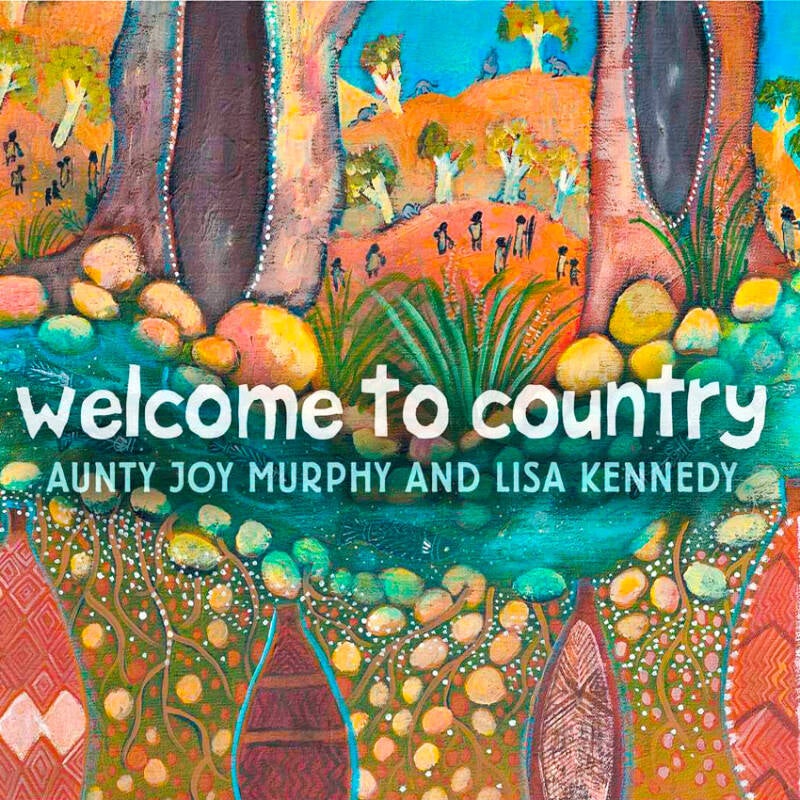
- Welcome to Country – Aunty Joy Murphy and Lisa Kennedy: Introduces children to Aboriginal connections to Country and can encourage respect for First Nations culture (Murphy & Kennedy, 2016).
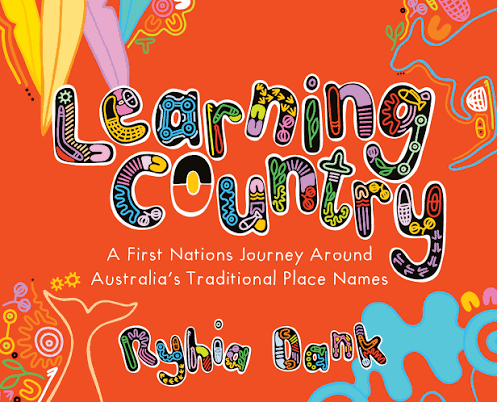
- Learning Country: A First Nations Journey Around Australia's Traditional Place Names – Ryhia Dank: Introduces children to First Nations place names and encourages appreciation of Country, culture and language (Dank, 2025).
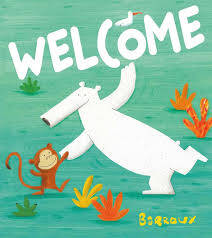
- Welcome – Barroux: Explores migration, difference and belonging and encourages empathy towards people from different backgrounds (Barroux, 2016).
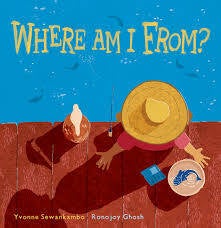
- Where Am I From? – Yvonne Sewankambo & Ronojoy Ghosh: Explores cultural diversity, identity, heritage and children's connections to different places and cultures (Sewankambo & Ghosh, 2026).
Children's Videos, Educational Programs and Shows
- Little J & Big Cuz: Introduces Aboriginal culture, Country, community and identity through children's experiences (SBS, n.d.).
- Play School – My Family, Your Family: Explores diverse family experiences and encourages respect for differences (ABC Kids, n.d.).
- Play School – Through the Window: Provides opportunities for children to explore different people, places and ways of living (ABC Kids, n.d.).
- ABC Kids – Indigenous Stories: Provides opportunities for children to engage with Aboriginal and Torres Strait Islander stories and perspectives (ABC Kids, n.d.).
Using the Resources to Build Understanding, Empathy and Resilience
These resources support children in recognizing cultural similarities and differences, respecting diversity and realizing that individuals can have different languages, practices, and experiences. Stories, programs, and community resources can prompt children to overcome stereotypes and develop empathy. Educators can ask questions like “How do we make everyone feel welcome?” and “What is unique about this child’s culture?” to foster understanding, inclusion, and resilience. Culturally responsive education practice entails respecting different epistemologies, ontologies, and praxis and working with children, families, and communities to create culturally safe environments (ACECQA, 2025).
References
ABC Kids. (n.d.). Play School. ABC.
Australian Bureau of Statistics. (2022). Cultural diversity: Census, 2021. Australian Government.
ABS – Cultural diversity Census 2021
Australian Children's Education and Care Quality Authority. (2024). Information sheet: EYLF practices – Cultural responsiveness.
ACECQA – Cultural responsiveness
Australian Government Department of Education. (2022). Belonging, being and becoming: The Early Years Learning Framework for Australia (V2.0). Australian Government Department of Education.
Australian Government – EYLF V2.0
Barroux. (2016). Welcome. [Use the publisher details from the edition you used.]
Be You. (n.d.). Cultural Actions Catalogue.
Be You – Cultural Actions Catalogue
Bronfenbrenner, U. (1979). The ecology of human development: Experiments by nature and design. Harvard University Press.
Dank, R. (2025). Learning Country: A First Nations journey around Australia's traditional place names. HarperCollins.
Murphy, A. J., & Kennedy, L. (2016). Welcome to Country. [Use the publisher details from the edition you used.]
Reconciliation Australia. (n.d.). Narragunnawali: Reconciliation in education.
Reconciliation Australia – Narragunnawali
SBS. (n.d.). Little J & Big Cuz.
SBS – Little J & Big Cuz
Sewankambo, Y., & Ghosh, R. (2026). Where am I from? Walker Books Australia.
Walker Books Australia – Where Am I From?
SNAICC. (2025). Family Matters Report 2025.
SNAICC – Family Matters Report 2025
Create Your Own Website With Webador